Who to Contact for Corporate Sponsorships: Top Job Titles
Are you a nonprofit wondering who to contact for corporate sponsorships? You’ve come to the right place! Securing a sponsorship can be a game-changer for your organization. Beyond the immediate financial boost, these partnerships offer increased visibility, access to new audiences, and resources to aid long-term stability. However, even the most compelling proposal will fail if it never reaches the right person.
Many nonprofits make the mistake of sending generic pitches to “info@” email addresses or high-level executives who don’t handle daily charitable requests. But in the corporate world, who you ask is often just as important as what you ask. To ensure your proposal is actually considered (and doesn’t just gather digital dust in an unresponsive inbox), you need to target the specific individuals whose roles are tied to community impact and brand growth.
In this guide, we’ll cover the following recommended job titles to help you land your next big partnership:
- CSR (Corporate Social Responsibility) Manager
- Community Relations Coordinator
- Brand Specialist
- Marketing Lead
- HR (Human Resources) Director
- CEO (Chief Executive Officer)
- Bonus: Anyone Who Already Supports Your Mission
- Other Ways to Pitch a Sponsorship
In a large corporation, departments are typically siloed. The person who handles employee benefits has very different goals than the person trying to get the company’s logo on a stadium. By tailoring your pitch to the specific goals of each role, you can transform your request from a favor into a strategic opportunity for their department.
Let’s begin!
#1: CSR (Corporate Social Responsibility) Manager
When it comes to who to contact for corporate sponsorships, a company’s CSR Manager is often your “Holy Grail” opportunity. This role exists specifically to manage the company’s social and environmental impact, and their performance is measured by how well the company gives back to the community.
Why they are a good fit: They’re already looking for you! CSR Managers are tasked with finding reputable nonprofit partners that align with the company’s mission. They understand the nuances of philanthropic ROI and are usually the gatekeepers of the corporate giving budget.
Here’s a template you can use to reach out:
Subject: Strategic Partnership Opportunity: [Nonprofit] + [Company]
Hi [CSR Manager Name],
I’ve been following [Company]’s commitment to [CSR Goal, e.g., environmental sustainability], and I am impressed by your recent work with [Project].
I’m reaching out from [Nonprofit]. We are currently launching [Project/Event], which aims to [Goal]. Given your focus on [CSR Pillar], I believe a partnership could help [Company] further its impact in [Location/Sector] while providing meaningful engagement for your employees.
Do you have 15 minutes on [Day] to discuss how we might align our goals?
Best,
[Your Name]
#2: Community Relations Coordinator
A Community Relations Coordinator (or Manager) acts as the bridge between a corporation and the local community. While a CSR manager might handle global strategy, the Community Relations lead focuses on “boots on the ground” impact.
Why they are a good fit: If your nonprofit operates locally or your event is tied to a specific city where the company has an office, this is your best point of contact. They care about local sentiment and the company’s reputation among its immediate neighbors.
Here’s a template you can use to reach out:
Subject: Supporting the [City] Community Together
Hi [Community Relations Coordinator Name],
As someone dedicated to [Company]’s local impact in [City or Region], I wanted to share an upcoming opportunity to support our neighbors.
[Nonprofit] is hosting [Event] on [Date], and we are looking for local partners who share our dedication to [Cause]. I’d love to show you how a sponsorship would put [Company] front-and-center for our [Number] local attendees.
Are you available for a brief call this week to explore this?
Best,
[Your Name]
#3: Brand Specialist
A Brand Specialist is concerned with how the public perceives the company. They manage the corporation’s visual and emotional identity.
Why they are a good fit: Sponsorships are a powerful form of cause marketing. A Brand Specialist will be interested in your nonprofit if your brand is prestigious, trusted, or reaches a demographic they are trying to capture. They want to know how their logo will look on your materials and how the partnership will make them appear to be a “hero” to their customers.
Here’s a template you can use to reach out:
Subject: Brand Alignment Opportunity with [Nonprofit]
Hi [Brand Specialist Name],
I’m reaching out because [Nonprofit] is preparing for our [Year] campaign, and we’ve identified [Company] as a brand that shares our values of [Value 1] and [Value 2].
We have a unique opportunity for [Company] to gain high-visibility brand placement among our [Demographic, e.g., tech-savvy parents] audience. I’ve attached a brief overview of the available visual assets and co-branding opportunities.
I’d love to hear your thoughts on how we can highlight [Company]’s identity through this partnership.
Best,
[Your Name]
#4: Marketing Lead
The Marketing Lead (or Director of Marketing) controls the budget for reaching new customers and driving sales. Unlike the CSR Manager, the Marketing Lead is focused on commercial returns.
Why they are a good fit: If your nonprofit event has a large, clearly defined audience, it is essentially a high-value advertising platform. Marketing Leads are interested in “eyes on the product.” If you can prove that sponsoring your gala or 5K will put their brand in front of 5,000 potential customers, they will listen.
Here’s a template you can use to reach out:
Subject: Reaching [Target Audience] through [Event]
Hi [Marketing Lead Name],
[Nonprofit] is currently finalizing sponsors for [Event], which will engage over [Number] participants in the [Industry/Region] area this year.
Based on [Company]’s current focus on [Market Trend/Product], I believe our audience represents a key growth demographic for you. We offer tiered sponsorship levels that include [Benefit, e.g., dedicated social media blasts and logo placement].
Can we schedule a quick chat to discuss the ROI we can offer [Company]?
Best,
[Your Name]
#5: HR (Human Resources) Director
The HR Director is responsible for the company’s internal health, which often includes hiring, retention, and employee satisfaction.
Why they are a good fit: Modern employees (especially Millennials and Gen Z) want to work for companies that give back. HR Directors are often looking for “team-building” activities and ways to boost morale. A sponsorship that includes volunteer opportunities for employees is a major win for an HR Director trying to improve their employee engagement scores.
Here’s a template you can use to reach out:
Subject: Employee Engagement & Team Building with [Nonprofit]
Hi [HR Director Name],
I know that [Company] values a strong workplace culture and community involvement.
[Nonprofit] is offering a unique sponsorship package for [Event/Project] that includes hands-on volunteer slots and “Day of Service” opportunities specifically designed for corporate teams. It’s a great way to boost morale while supporting [Cause].
Would you be interested in seeing how we can get your team involved?
Best,
[Your Name]
#6: CEO (Chief Executive Officer)
The CEO is the ultimate decision-maker, but they are also the busiest person in the building.
Why they are a good fit: Reaching out to the CEO is generally recommended only for small- to mid-sized local businesses. In a Fortune 500 company, an unsolicited email to the Chief Executive Officer will likely be deleted or redirected. Yet in a company with 20 employees, the CEO likely handles the checkbook and the community requests personally, meaning that’s the person you’d want to engage.
Here’s a template you can use to reach out:
Subject: [Company] + [Nonprofit]: A Local Partnership
Hi [CEO Name],
As a leader in our [City/Industry] community, your support carries significant weight. I’m the [Title] at [Nonprofit], and I’ve long admired how [Company] operates.
We are looking for a visionary partner to help us launch [Initiative]. I’d love to share how this partnership could cement [Company]’s legacy as a champion for [Cause] in our region.
Do you have a moment for a 10-minute call next week?
Best,
[Your Name]
Bonus: Anyone Who Already Supports Your Mission
Sometimes the best answer to “who to contact for corporate sponsorships” isn’t a manager or a director. It’s the person already in your database. Therefore, use your fundraising software (such as Double the Donation) to identify donors or volunteers who work at the companies you are targeting. These individuals are your “internal champions.”
Quick Tip: For this reason, it’s always helpful to collect employment information from your donors and volunteers. Adding an optional field in your giving and registration forms can go a long way!
Follow these simple steps to leverage existing supporters for your sponsorship proposals:
- The Identification: Find a donor who works at your target company. (Hint: Double the Donation’s Leading Companies report can help here.)
- The Ask: Instead of requesting funds, ask the individual for a “warm introduction” to their employer.
- The Power of Advocacy: A CSR Manager is much more likely to open an email from a colleague saying, “Hey, I volunteer at this nonprofit, and they do great work,” than a cold email from a stranger.
Here’s a template you can use to reach out:
Subject: Helping [Nonprofit] connect with [Company]
Hi [Supporter Name],
First, thank you so much for your ongoing support of [Nonprofit]. Your [Donations/Volunteer Hours] have made a real difference in [Specific Impact].
I noticed that you work at [Company], and we are currently looking to build a corporate partnership with them to support [Project/Event]. Would you be willing to provide a brief email introduction to the person on your team who handles community giving?
We aren’t looking for a formal commitment yet; just a chance to share our mission with the right person. I’ve attached a short blurb about the project that you can easily forward if that helps!
Thanks for being such a champion for our cause.
Best,
[Your Name]
Even if your contact isn’t necessarily a budget-weilding decision-maker, they can probably tell you who handles nonprofit partnerships or if the company is planning a major giving push.
Other Ways to Pitch a Sponsorship
While direct outreach is powerful, it’s not the only way to secure a corporate sponsorship. Many modern corporations have moved toward structured, digital processes for their giving. These include:
1. Online Application Portals
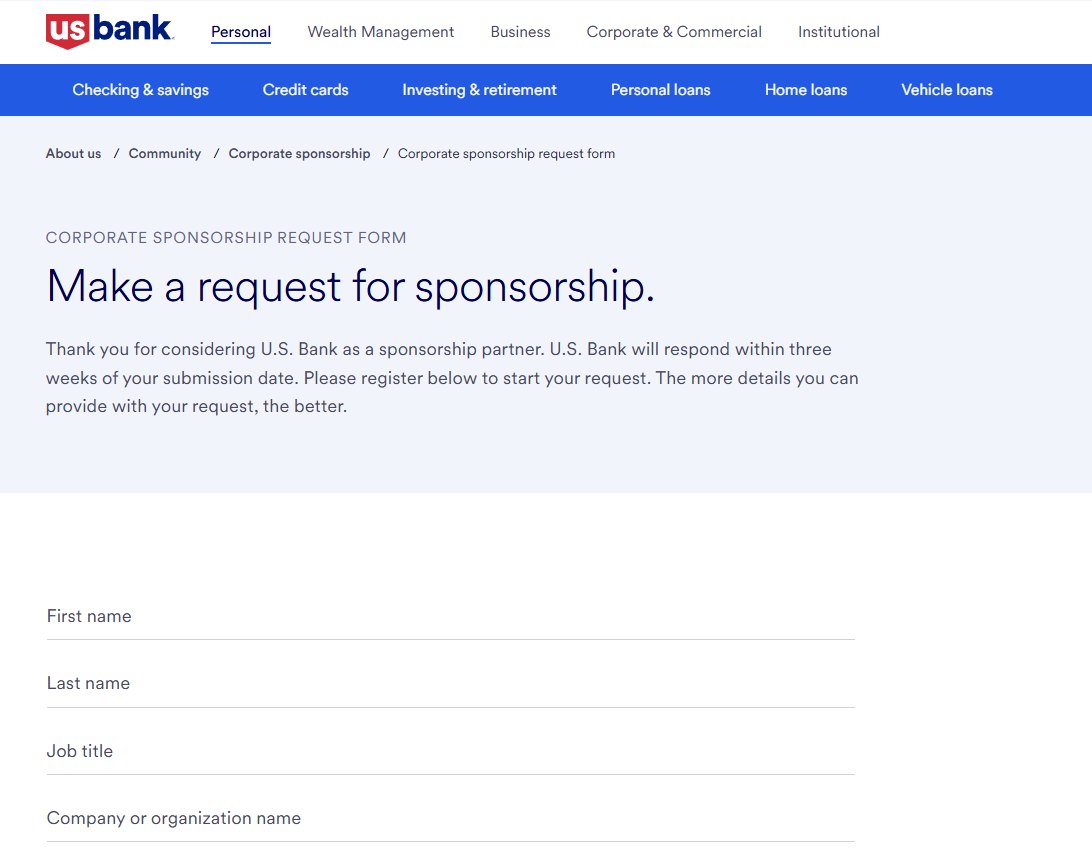
Many large companies (like Google, U.S. Bank, and Amazon) don’t accept emailed pitches. Rather, they offer dedicated grant and sponsorship portals where you can submit an online application. For the best results, take your time filling out the request form, providing relevant and compelling details about your organization, its mission, and your sponsorship needs.
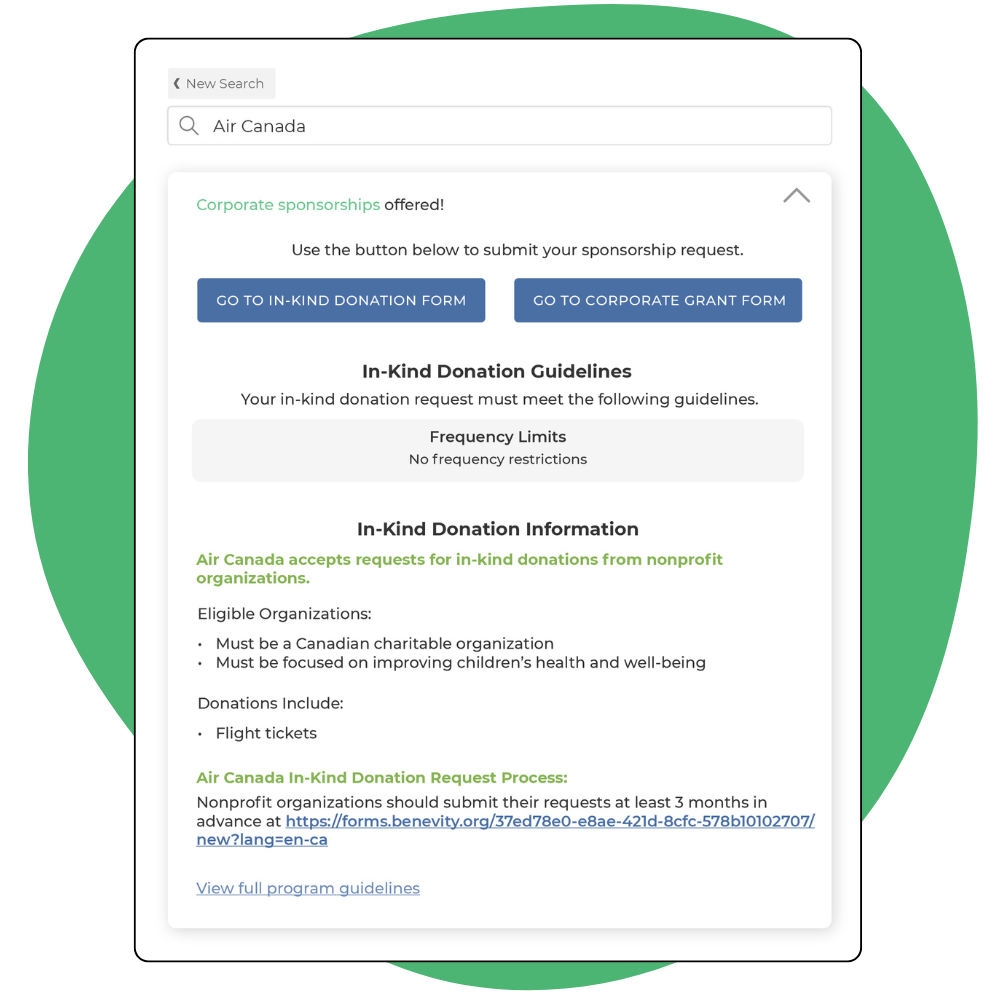
Pro Tip: Use a tool like Double the Donation to search for participating companies. The industry-leading corporate database doesn’t just show you matching gift information; it points you toward a company’s giving guidelines, contact information, and direct application links.
2. LinkedIn Networking
Don’t just email potential sponsors; actually engage! Follow the company’s LinkedIn page or connect with a member of their team to see which causes they’re currently celebrating. When you reach out, mention a specific post they shared about a recent community project.
3. Board Member Connections
Your nonprofit’s board of directors is one of your most valuable assets. Map your board members’ professional networks to see whether any have a direct line to executives at your target sponsorship companies.
Final Thoughts on Sponsorship Outreach
Compelling sponsorship outreach typically requires a blend of research and persistence. Before you hit “send” on your proposal, make sure you’ve done your homework:
- Does this company’s mission align with ours?
- Have they sponsored similar organizations in the past?
- Am I offering them a benefit (such as marketing, engagement, or CSR) that they actually need?
When you know exactly who to contact for corporate sponsorships, and you personalize your approach in doing so, you can lay a strong foundation for successful, mutually beneficial corporate sponsorships for your organization.
Interested in accessing even more sponsorship opportunities? Find out how Double the Donation can support your efforts!

