How to Secure Corporate Sponsorships: Find Your Perfect Fit
Corporate sponsorships are strategic partnerships in which companies provide financial support, in-kind goods, or specialized services to nonprofits in exchange for visibility and community involvement. Sponsorships are mutually beneficial investments, allowing businesses to enhance their brand reputation and engage with specific audiences while providing nonprofits with the resources they need to scale their mission and fund high-impact initiatives.
Securing the right corporate sponsorships to power your nonprofit’s efforts is about strategic alignment with your cause. To find your perfect fit, match your mission with a company’s specific CSR pillars.
Businesses everywhere devote time and energy to making a positive impact through corporate citizenship. Often, they do this by supporting nonprofits! If your organization is looking for extra support, corporate philanthropy efforts such as sponsorships are a major opportunity to capitalize on.
In this guide, we’ll cover everything you need to know to find and secure the perfect corporate sponsorships for your organization, including:
- What are Corporate Sponsorships for Nonprofits?
- How to Secure Corporate Sponsorships in 7 Easy Steps
- Finding Your Perfect Corporate Sponsorship Match
- Sponsorships to Be Inspired By [3 Real-Life Examples]
Along with sponsorships, you can further expand your strategy by tapping into other corporate giving opportunities, such as matching gifts, volunteer grants, and more. Let’s dive in so you can start building powerful partnerships to back your mission!
What Are Corporate Sponsorships for Nonprofits?
Corporate sponsorships refer to the direct support companies give to nonprofits. Usually, a sponsorship is an initiative in which a company funds a specific project, program, or event. Often, the two parties reach a mutually beneficial agreement under which the business provides funding to the nonprofit and the nonprofit promotes the company in its marketing.
However, successful corporate sponsorships can take on many forms. A business’s support might look like:
- Financial Sponsorship: The most common type of sponsorship is when companies donate a large sum of money for a specific purpose. This might be to fund an event, purchase new technology, or launch a mission-relevant program.
- In-Kind Sponsorship: Some businesses opt to donate goods or services instead of money. For instance, a company might provide your nonprofit with event supplies, such as auction prizes, or professional services, such as legal counsel.
- Media Sponsorship: Don’t have much marketing experience? A business can provide media sponsorship with free promotional materials, advertising space, or other marketing services, such as professional graphic design support. Some may even go as far as to promote your nonprofit directly to their customers.
Keep in mind that sponsorships are often only one part of a company’s overall corporate social responsibility (CSR) strategy. Many companies also have workplace giving programs that let their employees play a role in determining where the company donates. This means even if you don’t secure a large-scale sponsorship with a company, you might still get support from them.
For instance, a business may offer its employees matching gifts to double their donations to hundreds of nonprofits year-round. Many of your donors likely work for companies that offer these programs, meaning you may be able to earn corporate support now!
Understanding the Widespread Benefits of Corporate Sponsorships
When a business’s goals align with your nonprofit’s, both you and the company sponsoring your organization benefit. Let’s take a look at what these advantages look like from each perspective:
For Nonprofits
Depending on your needs and the type of corporate sponsorship you secure, your organization could receive:
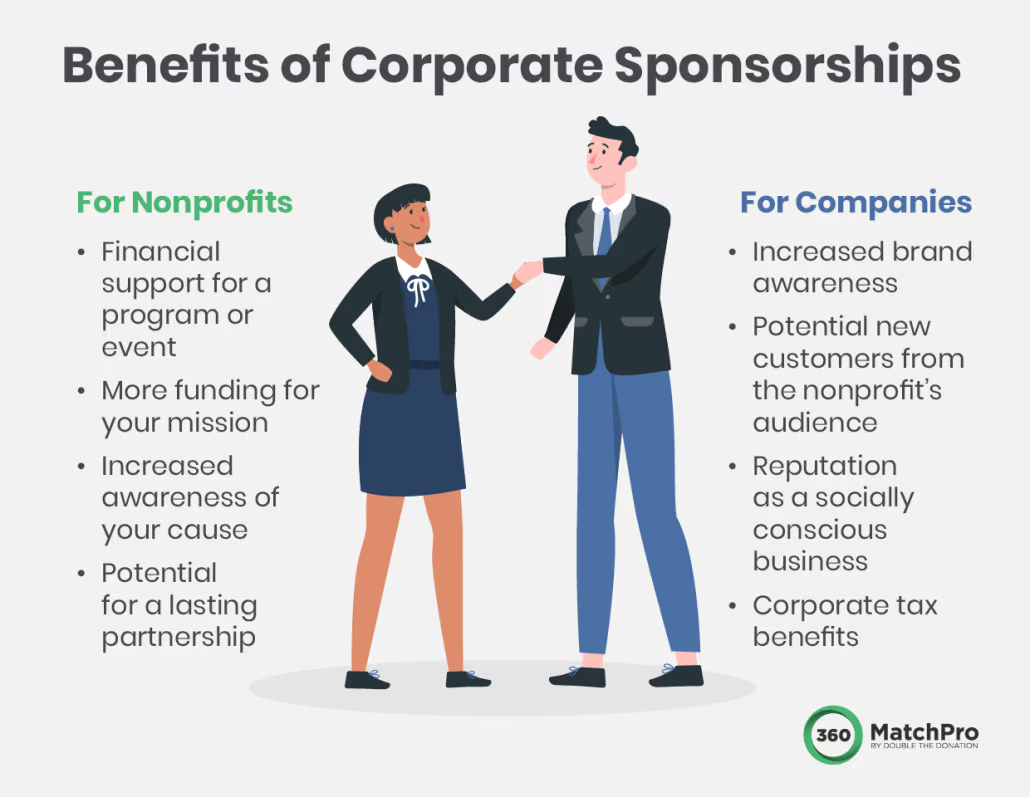
- Financial support for a program or event. Sponsorships usually provide a large lump sum, allowing your nonprofit to launch a major program, fundraiser, or event that you might not otherwise be able to fund with regular donations alone.
- More funding for your mission. Whether your sponsor provides direct funding, supports an event, or increases your marketing opportunities, additional funding powers your mission and takes the pressure off your budget.
- Increased awareness of your cause. Corporate sponsorships market your nonprofit’s cause to a new audience: the business’s customers. If your sponsor’s audience is interested in your work, you could acquire a slew of new donors!
- Potential for a lasting partnership. If you and your sponsor develop a strong relationship, they may be open to supporting your organization again in the future. This could include providing additional sponsorships, encouraging employees to volunteer, or even creating a custom matching gift program that applies only to your nonprofit.
For Companies
Meanwhile, your corporate sponsor can benefit from:
- Increased brand awareness. A key part of many sponsorship agreements is that the nonprofit adds the sponsor’s name and logo to marketing materials, signage, and event merchandise. Customers who see these materials will be eager to continue doing business with the company, increasing customer loyalty.
- Potential new customers from your nonprofit’s audience. When your supporters see the company’s logo and learn that they funded your nonprofit’s event or program, they may decide to shop at your sponsor’s business.
- A reputation as a socially conscious company. Businesses that regularly participate in public CSR initiatives are viewed more favorably. Philanthropic efforts, such as corporate sponsorships, can even motivate employees by cultivating trust and instilling a sense of purpose in their work.
- Tax benefits. Just like individual donors can get charitable tax deductions for their contributions, so can companies.
Altogether, these benefits make any corporate sponsorship a win-win with the potential for lasting, positive impacts for everyone involved.
How to Secure Corporate Sponsorships in 7 Easy Steps
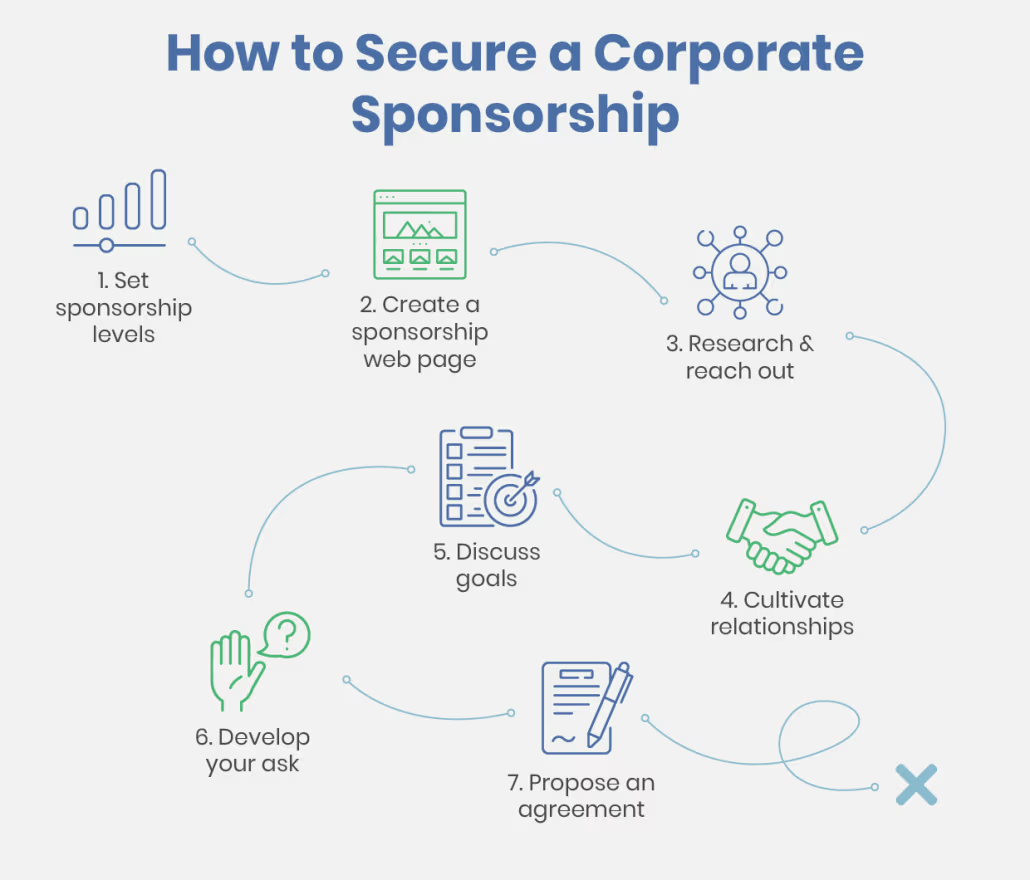
Ready to begin the process of reaching out and securing your sponsorship? We’ve broken the process down into seven simple steps.
Whether you’re a seasoned fundraiser or a local nonprofit leader, having a repeatable framework ensures you don’t leave money on the table. Follow this action plan to move from initial research to a signed sponsorship agreement that fuels your mission.
1. Set sponsorship levels
Before you ask for a corporate sponsorship, decide exactly what you’re looking for from sponsors. Most sponsorship agreements are negotiated, in which your nonprofit agrees to promote the sponsor in exchange for monetary support. To start and streamline these conversations, you’ll want to prepare sponsorship levels.
Sponsorship levels are tiers that businesses can choose from to provide different amounts of support based on their financial capacity and level of interest. For example, you might set three different tiers:
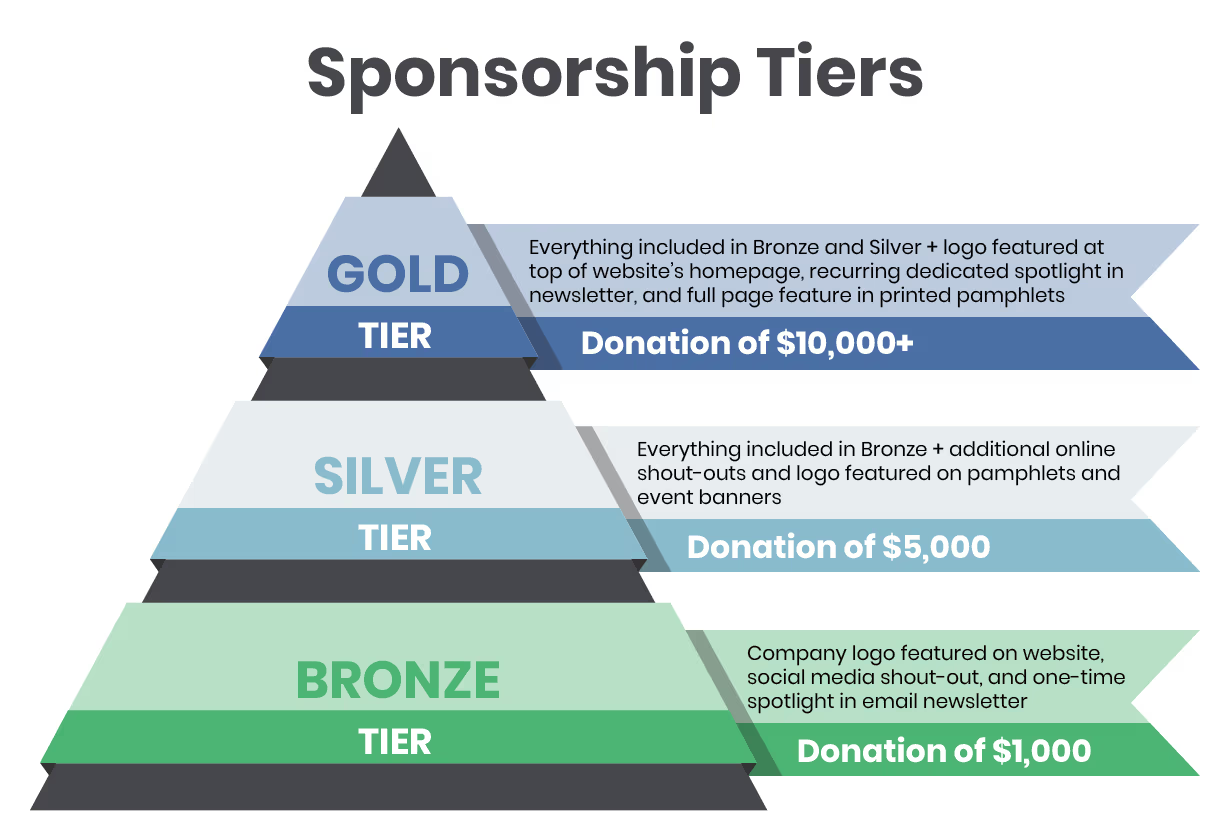
- A low-level sponsorship, valued at $1,000 – $5,000.
- A mid-tier sponsorship of $5,000 – $10,000.
- A major sponsorship valued at over $10,000.
These levels are just a rough outline, and your nonprofit’s levels should be based on your specific needs and estimated sponsor capacity. For example, during a capital campaign, you would likely have tiers with much higher donation amounts and more significant rewards, such as the right to name a new building or a specific program.
2. Create a sponsorship page on your website
Prospective donors and potential sponsors go to your website to learn more when deciding whether to donate to your cause! To put your best foot forward, create a dedicated sponsorship page that includes essential information about what it means to sponsor your nonprofit.
This page should include your case for support, sponsorship levels, and details about the benefits companies receive by partnering with your nonprofit. Additionally, don’t forget to include up-to-date contact information so businesses can reach out to you to start the sponsorship process.
When designing your website, consider potential sponsors as a new audience, alongside donors and beneficiaries. Make sure your sponsorship page is easy to find on your website by including it in your navigation bar or footer and linking to it on your “ways to give” page.
Check out a few examples of well-done sponsorship web pages from inspiring nonprofits here!
3. Research and reach out to prospective sponsors
Now that your sponsorship page is set up, it’s time to dive into researching your prospective sponsors. This stage is crucial for identifying the companies most aligned with your mission and increasing your chances of securing sponsorship.
Start by reviewing the values, charitable histories, and corporate social responsibility (CSR) initiatives of the companies on your shortlist. Go beyond surface-level information and dig deeper into how these companies engage with nonprofits, the causes they support, and the kind of impact they aim to make.
But here’s where you can leverage a powerful tool: donor employment information.
By researching your current donors or board members, you can uncover potential connections to companies that might be great sponsorship prospects. If you know that someone affiliated with your organization works at or has connections to a corporation, that can be your foot in the door. Look for these employment ties on LinkedIn, in your CRM, or by reaching out directly to donors for insights.
Here’s how to make the most of this information:
- Look at where your supporters work: If your donors or volunteers are employed at companies with a track record of supporting charitable initiatives, this could be a sign that they would be receptive to sponsoring your nonprofit.
- Identify shared values: Review the mission and values of both the potential sponsor and your nonprofit. Can you make a connection between their CSR efforts and your nonprofit’s mission? If your organization’s focus aligns with their ongoing charitable work, you’ll be better positioned to craft a compelling case for sponsorship.
- Tap into personal connections: Donor employment connections may also provide a unique opportunity for a warm introduction. Having a supporter vouch for your nonprofit within their company can be a game-changer when seeking sponsorships.
Once you’ve identified potential sponsors using this approach, it’s time to make your first contact. Whether through email, a phone call, or an introduction from a mutual connection, your goal is to establish a relationship and gauge interest in your mission. Keep your initial outreach casual (don’t ask for anything just yet), but focus on introducing your nonprofit and explaining why you believe your work aligns with the company’s values. This will set the stage for a more in-depth conversation down the road.
4. Cultivate relationships
Once you’ve done your initial outreach, start cultivating relationships with promising potential sponsors. At this stage, some businesses may be more interested than others, but it’s worthwhile to spend time meeting with each one to discuss your nonprofit’s mission in more detail. You can learn a lot about each business by having multiple introductory conversations.
If possible, have meetings in person so company representatives can get to know your nonprofit’s leadership personally. For example, you might ask if they’d like to have coffee with a board member or go out to dinner with your founder.
5. Discuss needs and goals
After getting to know prospects and gauging their interests, you can start discussing a sponsorship in earnest. Discuss the reason your nonprofit needs corporate sponsorships and what you hope to achieve with a sponsor’s help. Explain your specific needs and goals, such as advertising support to raise awareness of your cause and spur greater community action.
Ask businesses about their goals, as well. What goals guide their current CSR strategy? Do they want to engage more customers by supporting the causes they believe in? Explain how you could boost their brand awareness by associating their name and logo with your nonprofit’s mission.
6. Develop your sponsorship appeal
It’s time to hammer out the details and make a formal request to the businesses you think would be the best fit for a corporate sponsorship. In your sponsorship ask, make sure to include:
- Details about the specific project, program, or event the sponsorship will support.
- Your project’s budget and goals, including the monetary amount or in-kind donation items you need from the sponsor.
- What you’ll do for the sponsor, such as how you plan to promote their involvement in your marketing materials or event signage.
- How to take the next step if they’re ready to partner with your organization.
Additionally, reiterate anything you’ve discussed about why your nonprofit is a good fit for the business. Highlight your shared audiences and value alignment to remind them of the mutual benefits your partnership will deliver.
Get started with Double the Donation’s free downloadable sponsorship proposal templates. Just be sure to customize the provided copy to suit your own organization’s needs and strategies!
7. Propose a plan and agreement
Once a business responds yes to your ask, congratulations! You’ve secured a corporate sponsorship. But the work isn’t done quite yet. The final step is to agree with your new sponsor on exactly what the sponsorship will include.
Meet with your sponsor to work out the details of the sponsorship, including each party’s goals and expectations. Outline exactly what the sponsor will provide and when, along with the concrete ways your nonprofit will recognize the support.
Depending on the sponsorship, this may involve creating and signing an official contract agreement. If this applies to your sponsorships, have your nonprofit’s lawyer create and review all materials you plan to present to sponsors.
Finding Your Perfect Corporate Sponsorship Match
Excited to seek out a corporate sponsorship for your organization? Start the process by researching companies that might be willing and able to support your cause. We recommend using the following strategies to locate businesses that could be your perfect match.
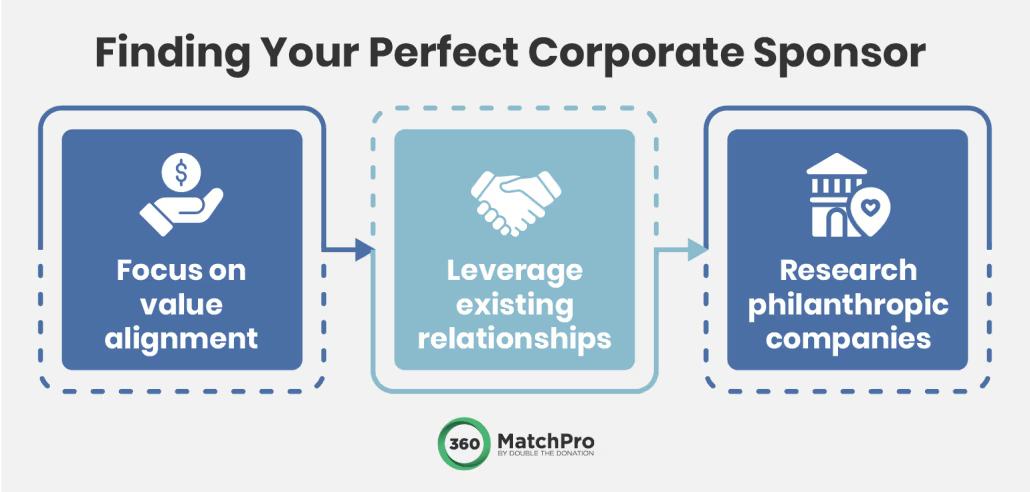
Strategy #1: Focus on Value Alignment
Your ideal corporate sponsor should have a genuine interest in your cause. If their values align with yours, they’ll be more likely to partner with your nonprofit. Additionally, businesses that share your values likely have customers and employees with similar values and charitable interests. This means more prospective donors for your nonprofit.
To find companies with values that align with yours, assess corporations’ audiences and product and service offerings. For instance, an animal shelter should research pet supply stores and dog grooming businesses, knowing these businesses’ customers likely value animals as much as you do.
Strategy #2: Leverage Existing Relationships
It’s easier to secure corporate sponsorships if your organization already has a connection with the business. Existing relationships make setting up introductions easier, which allows you to show businesses’ decision-makers that your nonprofit’s cause aligns with their interests.
Your nonprofit likely already has more connections to business than you might realize. For instance, any of these connections could help you get your foot in the door:
- Previous partnerships with a company
- Employees who have donated to your nonprofit
- Board members who work for or with the business
- Businesses that operate in the same local community
If you can show prospective sponsors that your nonprofit is already connected to their business and that they’ll benefit from a well-aligned partnership, they’ll be more likely to sponsor you.
Strategy #3: Research Philanthropic Companies
The final piece that makes a business a perfect potential corporate sponsor is an established habit of giving. If a company has a clear philanthropic history, it is likely to continue giving in the future!
Search for companies that have publicly donated to nonprofits and those with robust CSR programs that include sponsorships. Lists of top matching gift and volunteer grant companies can be a good place to start.
Plus, nonprofits can invest in prospect research tools, such as a corporate giving database. These databases allow nonprofits to research individual donors’ eligibility for various corporate giving programs (including corporate sponsorships) and businesses’ philanthropic offerings and policies.
Companies that offer other CSR initiatives have an established history of giving to nonprofits. This means that even if you can’t find exact information about their past sponsorships, you can still get a strong idea of what causes they support and what form that support usually takes.
Sponsorships to Be Inspired By [3 Real-Life Examples]
Before seeking sponsorship, consider exploring real-world examples to see what successful partnerships look like in practice. Get inspired by these three co-marketed campaigns, and brainstorm ideas for how your nonprofit could similarly leverage corporate support.
#1: Nordstrom + Central Park Conservancy
Clothing company Nordstrom provided its support to the nonprofit Women’s Committee of the Central Park Conservancy by sponsoring its Annual Family Party event. The family-friendly event featured fun activities and games for kids in Central Park to raise funds for the park’s playgrounds.
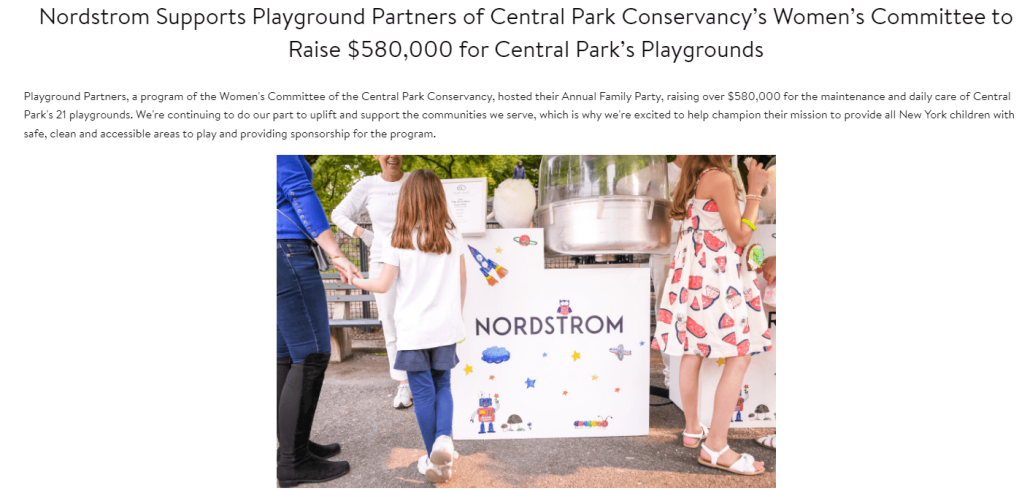
Thanks to Nordstrom’s sponsorship, the nonprofit collected more than $500,000 to support the maintenance and care of the playgrounds in Central Park.
#2: Bank of America + Boys & Girls Clubs
The Bank of America Charitable Foundation has partnered with the Boys & Girls Clubs of America for decades, providing monetary support for the organization’s programs for at-risk youth. In recent years, Bank of America upgraded its support by sponsoring a program called Project Learn.
Bank of America provided a $1 million grant to sponsor Project Learn, which provides tutoring for children aged 6-18 nationwide. The grant was divided between 10 local Boys & Girls Clubs that all primarily serve diverse communities.
#3: Target + Nonprofits Across the US
Corporate sponsorships aren’t always restricted to a specific program or event. For instance, Target has sponsored multiple nonprofits with in-kind donations during the holiday season.
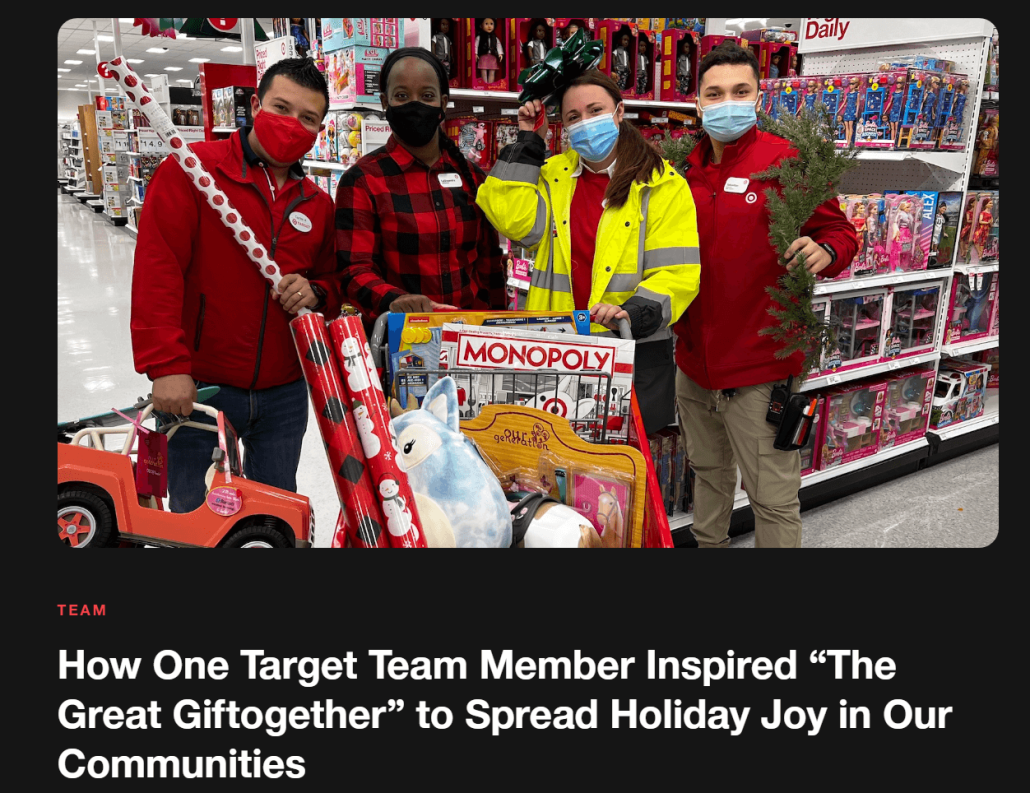
The nationwide initiative was known as “The Great Giftogether,” during which Target stores across the country partnered with local nonprofits to identify families in need and provide them with donated holiday gifts.
Wrapping Up & Additional Corporate Giving Resources
With these strategies and a motivated team, you have everything you need to find your perfect corporate match and secure a sponsorship for your nonprofit cause. But don’t stop there! Beyond corporate sponsorships, you can leverage workplace giving opportunities at any time to double your supporters’ contributions and dramatically increase your fundraising results.
To further explore all the ways your nonprofit can tap into corporate philanthropy, check out these additional recommended resources:
- How Nonprofits Can Unlock Powerful Corporate Sponsorships. Discover how to move beyond cold outreach and into strategic partnerships
- Winning Workplace Giving Strategies & How to Leverage Them. Read up on the variety of ways you can supplement corporate sponsorships with other workplace giving opportunities. Your supporters can be your greatest advocates!
- Corporate Matching Gift Companies: 45+ Top Opportunities. Want a headstart on finding potential sponsors? Check out this list of companies that donate the most to nonprofits in matching gifts. Plus, they’re likely to invest in multiple types of philanthropy.
- How to Unlock Corporate Giving: The Key to Boost Donations. Discover more strategies for maximizing corporate support for your nonprofit via sponsorships, matching gifts, employee volunteerism, and more.