
9 Trends in Corporate Philanthropy That Dictate the Future
The state of philanthropy is often difficult to measure. As a result, it can be difficult to know if changes in your nonprofit’s donations are reflective of sector-wide changes or just specific to your organization. Fortunately, there’s one area of philanthropy that’s constantly reported on: corporate giving.
Corporate philanthropy has a long history, with the development of the social contract between businesses and consumers gaining traction in the 1970s, but its original proponents date back to the late 1800s, with Andrew Carnegie’s Gospel of Wealth.
All this is to say that corporate philanthropy has been around for a long time and has come a long way since its origins. Keeping up with today’s trends can help your nonprofit tap into the support you need. As such, we’re here to explore leading trends in corporate philanthropy that will likely dictate the future of the nonprofit sector.
Quick Note: What Is Corporate Philanthropy?
Before we dive into the trends we’re seeing, it’s important to have a solid understanding of what corporate philanthropy actually is. By definition, corporate philanthropy includes charitable actions companies take to improve society, usually in the form of donations to charities.
Corporations donate to different causes based on their specific philanthropic missions. For instance, one corporation may be dedicated to sustainability while another focuses on improving economic inequality. Regardless, corporate philanthropy is born out of the idea that businesses have responsibilities to society, just as any other citizen does. However, the decision to participate is often a strategic one. After all, consumers and employees alike are more inclined to engage with businesses that have positive reputations.
One key distinction to note is between corporate philanthropy and corporate social responsibility (CSR).
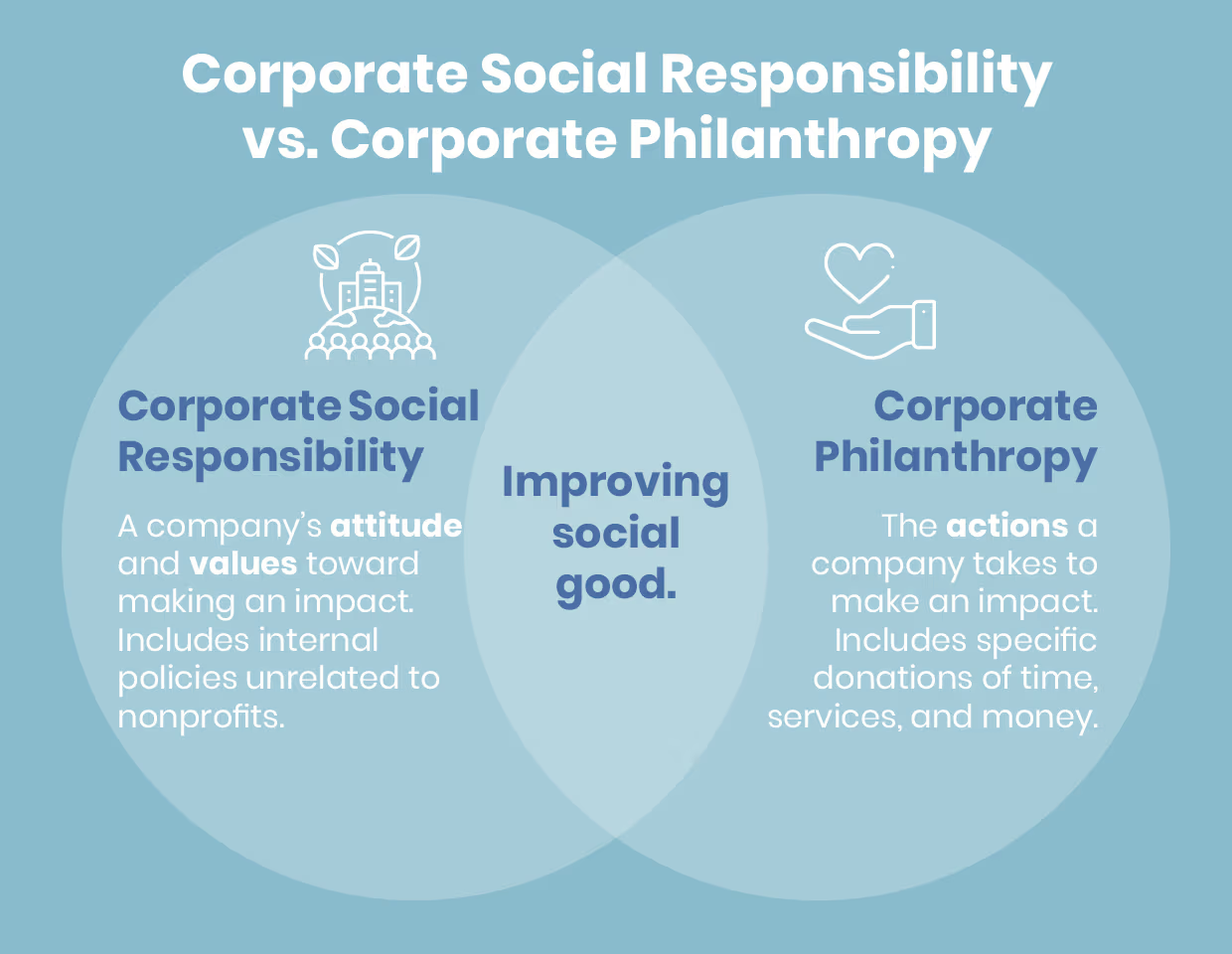
Corporate philanthropy is a type of CSR, but CSR encompasses additional activities corporations can undertake to improve society that do not involve donations to nonprofits, such as improving working conditions and ensuring their products are environmentally friendly.
As such, this guide will specifically look at businesses’ practices for giving to nonprofit causes. Let’s begin!

Trend #1. Shifting corporate giving focus areas
Every business has its own philanthropic mission that dictates whether it has a primary focus on supporting the arts, the environment, health services, economic development, or another cause. However, businesses also want to respond to the issues their employees and customers currently care about the most.
Based on the past few years and new emerging philanthropic initiatives, we can make educated guesses about what focus areas businesses will have their eyes on for the foreseeable future. The top three to be aware of are:
- Diversity, equity, and inclusivity (DEI). DEI has been gaining traction as a focus area for years now, and businesses have responded to public demand to take a stronger stance on reporting marginalized groups. This includes internal practices, such as Patagonia’s commitment to becoming an antiracist company and Adobe’s pledge to donate $6 million to support creators from underrepresented groups.
- Environmental protection and sustainability. For younger generations, the environment is the issue they feel corporations should be focused on, with one in three Millennials and one in three Gen Zers citing climate change as their top personal concern. Consumers are also increasingly asking companies to expand their efforts and are highly critical of greenwashing.
- Disaster relief. Closely entwined with environmental protections, businesses have also shifted focus to disaster relief. Many local corporations can act more agilely than governments can in the event of a disaster. This assistance can range from providing supplies for individuals displaced during natural disasters to pledging to alleviate the long-term outcomes of previous disasters.
Nonprofits with these and related focus areas should be loud and proud about their commitments to these pressing issues. However, charitable organizations with other types of missions shouldn’t despair. Instead, continue to do your research and find businesses with philanthropic missions that align with yours.
Trend #2. Strategic incorporation of new technology
How businesses deliver support to nonprofits and how nonprofits process that support depend on the tools they have at their disposal. Therefore, understanding new corporate giving technology helps both companies and nonprofits capitalize on new prospects and keep their efforts organized.
The following corporate giving technologies skyrocketed in popularity recently:
- Matching gift auto-submission
- AI-driven giving and fundraising platforms
- Giving cryptocurrency via the Blockchain
- Matching gift policy databases
Meanwhile, software solutions like workplace giving platforms have enabled corporations to organize their employee giving programs and even provide their teams with information on reputable nonprofits to support.
However, looking forward, the name of the game is automation. The faster, more convenient, and less resource and time-intensive it is to participate in philanthropy, the more businesses will do so. This applies to individual donors and corporations alike.
For instance, one tool changing the landscape is matching gift auto-submission. Auto-submission streamlines potentially lengthy matching gift application processes by allowing donors to have their match requests completed for them. Here’s how it works:
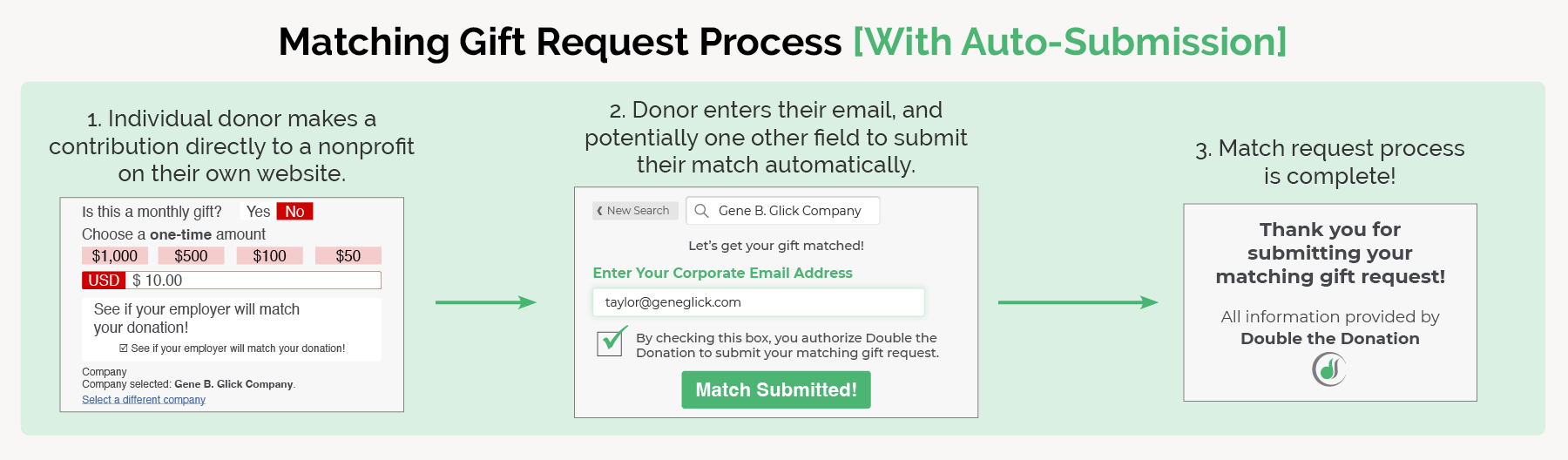
- The donor gives as usual to a nonprofit using matching gift software. Auto-submission is currently available only to donors who give to nonprofits through Double the Donation. This is because auto-submission is only possible through integrated partnerships with select CSR software vendors. Essentially, auto-submission technology pulls information from the CSR software and the Double the Donation platform, meaning both are necessary to access this tool.
- The donor enters their corporate email address. To connect eligible donors with their employer’s CSR platform, supporters are asked to provide their corporate email address (or another unique corporate identifier) while giving. With this information, the software automatically pulls up their information.
- The donor is given the option to use auto-submission. After completing their gift, donors can opt in to auto-submission. If they choose to do so, their matching gift application will be submitted for them with no additional work needed on their part.
For a more in-depth look at how this software works, check out this video from our team at Double the Donation:
To stay on top of new software advancements, nonprofits should have regular technology debriefings where employees can bring new ideas to the table about emerging platforms and how the nonprofit can leverage them.

And from a corporate perspective, embracing workplace giving software demonstrates their commitment to engaging with nonprofits effectively. For instance, pivoting to a CSR platform that supports auto-submission signals that your business is willing to innovate and improve employee giving over time.
Trend #3. More small to mid-sized company participation
Companies don’t have to be in the Fortune 500 to launch a corporate giving program. In fact, Double the Donation reports that the number of small to mid-sized companies has grown rapidly due to:
- A rise in new ways to give. As new technologies enter the mainstream, such as cryptocurrency, it becomes easier for companies to donate to nonprofits that fit their giving preferences. For instance, a small company that can only donate crypto would benefit from a crypto donation platform.
- Popularization of corporate giving. As previously mentioned, corporate giving programs are on the rise, meaning that more small to mid-sized companies might feel inspired to join their larger counterparts.
This is great news for nonprofits because it allows them to target local companies and businesses. With fewer points of contact, partnering with smaller businesses allows nonprofit professionals to build stronger relationships with potential donors.
Meanwhile, small to mid-sized company owners shouldn’t count out the prospect of making a difference through corporate giving. As long as its executives plan their corporate giving efforts effectively and show a genuine interest in social action, any company can reap the benefits.
Trend #4: Increasing prioritization of corporate volunteerism
Corporate giving is undergoing a fundamental shift as companies move away from traditional checkbook philanthropy in favor of more hands-on, mission-driven engagement. Today, volunteerism has become a central focus for businesses looking to expand their giving priorities and make a tangible impact on the nonprofits they support. And it’s continuing to trend in that direction!
What does this volunteerism trend mean for your nonprofit?
With this rise in corporate interest, nonprofits must view every day of service as a strategic gateway to deeper support. However, as the volume of corporate interest grows, so does the process gap. Recent Double the Donation research indicates that ~90% of nonprofits lack a formal process to track or follow up on the financial opportunities, specifically volunteer grants, linked to these hours.
To capitalize on this increased prioritization, organizations should focus on:
- Accommodating Corporate Groups: Whenever possible, nonprofits should accommodate corporate groups, as these are prime opportunities to cultivate individual employees for direct donations and employer matching gifts.
- Facilitating the Financial Connection: Companies are increasingly turning toward grants and in-kind giving alongside service. Nonprofits that proactively bridge the communication gap between a volunteer’s time and their company’s philanthropic programs can transform passive supporters into invested financial partners.
Approximately 50% of nonprofits now report receiving more than 500 corporate volunteer hours annually. Without a proactive strategy to capture the average volunteer grant rate of $15 per hour, these organizations risk losing roughly $7,500 in revenue each year.
Ultimately, as businesses prioritize service as a core component of their CSR strategy, the nonprofits that succeed will be those that provide the right education and digital tools to ensure every hour of service carries its full financial potential.
Trend #5. Repositioning the scope of “corporate philanthropy”
Businesses are being challenged to do more, and, as a result, leaders in corporate philanthropy are questioning just what “more” means. Let’s take a look at what corporate philanthropy meant just a few years ago compared to what consumers are pushing for today:
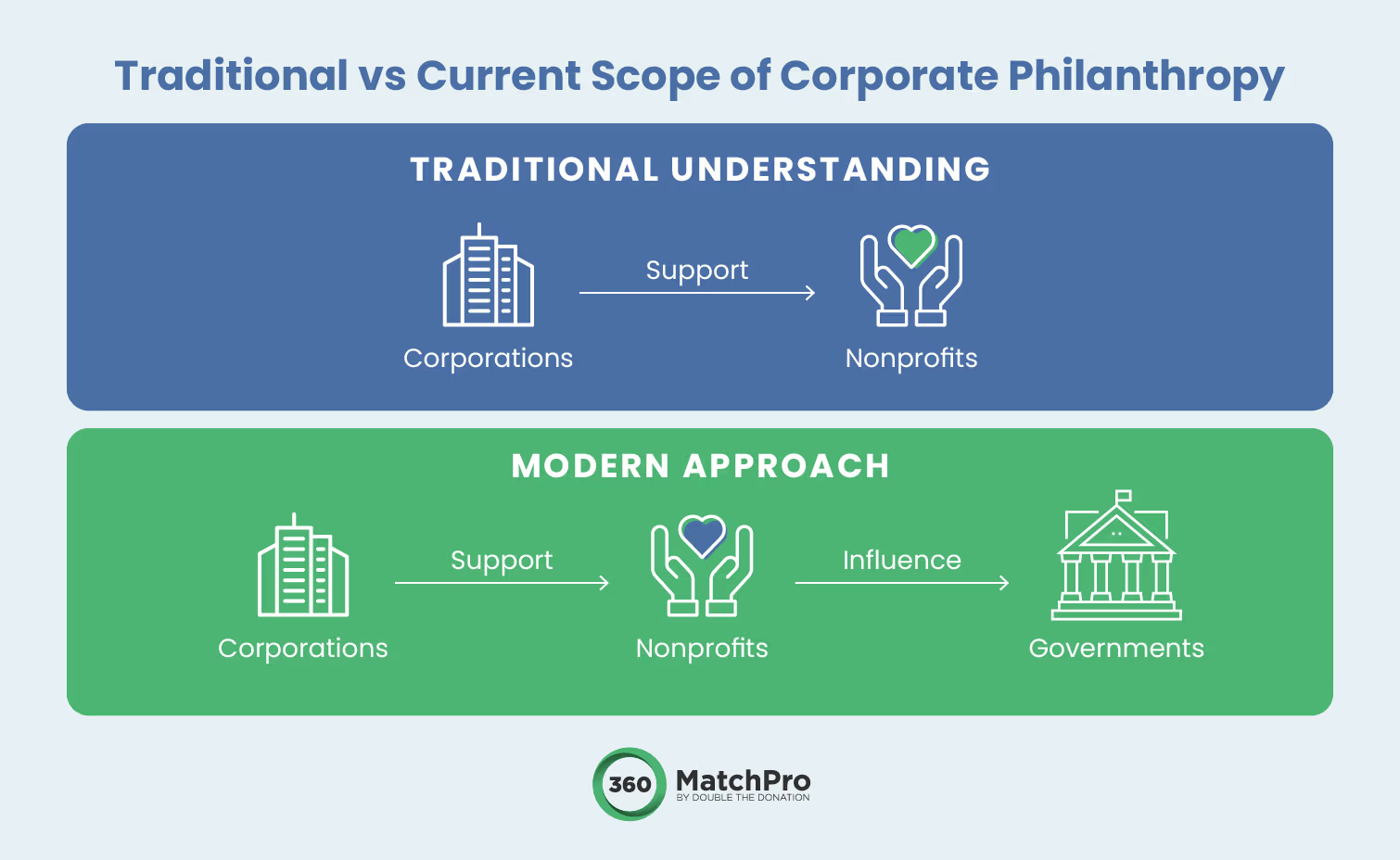
- Traditional viewpoint. Businesses engaged in corporate philanthropy should act as external benefactors to nonpartisan charities. Essentially, the business’s role is to provide funding to deserving nonprofits without influencing their operations.
- Current viewpoint. Businesses have a responsibility to be proactive in the causes they champion. This means not only funding nonprofits but also grassroots groups committed to political change. In other words, businesses need to advocate for systemic change not only by supporting good causes but also by actively calling out and disengaging from bad practices.
Deloitte’s extensive report on current trends in corporate philanthropy, What’s Next for the Philanthropy: Seeing Philanthropy in a New Light, effectively sums up this phenomenon and provides examples of corporate foundations adjusting their thinking:
Established institutions of all sizes, from the Ford Foundation to the Whitman Institute, are rethinking their strategies, looking for ways to share power and make their giving more “proximate” to the communities they serve. Funders from Los Angeles to Montreal are experimenting with political action—advocating for policy change that can guide the allocation of large pools of government dollars. And popular books like Winners Take All, Just Giving, and Decolonizing Wealth, along with recent critiques and legislation focused on donor-advised funds, have called out harmful power dynamics and posed serious and existential questions about the practices and structures of philanthropy.
For your nonprofit, look for businesses interested in taking a more active role as partners to your organization. This might take the form of marketing support, access to additional resources and networks, or help with developing new programs.
Trend #6. Growing focus on local and community groups
Ultimately, businesses are outsiders in the nonprofit world. Corporate philanthropy experts today understand that local businesses are the experts on the issues that impact their communities and have the knowledge and infrastructure to make a difference.
In practice, this means some businesses are turning away from establishing their own nonprofits or philanthropic practices and instead relying more on supporting external nonprofits. As part of this shift in attitudes, more corporations are considering the role of grantmaking. Through grantmaking, businesses can put their mission statement out into the world and, with a little promotion, trust that nonprofits will flock to them rather than needing to seek them out.
As a nonprofit, this means reconsidering your grant application strategy by asking questions, such as:
- Do we have the research tools we need to find new grant opportunities?
- Is our nonprofit equipped to put together a strong grant proposal?
- Do we have relationships with businesses and foundation leaders we can leverage to get our foot in the door?
Additionally, when it comes to grants, many businesses are embracing a trust-based approach to nonprofits with which they already have relationships. This means that in times of crisis, the business will waive various normal stipulations, or even the entire grant application process, to provide immediate funding.
All of this means that just like with your donors, your nonprofit’s strongest tool for tapping into corporate philanthropy is the relationships you can build with business leaders. Consider how you can show off your work and knowledge of your community to businesses. This might involve seeking an initial small-scale sponsorship or partnering with an organization to host a corporate volunteer day.
Trend #7. Increasing association of identity and philanthropy
Philanthropy is no longer just something a company does. Rather, it’s a reflection of the company’s beliefs and values. Consumers and employees then want to associate with brands they feel share their values.
As such, businesses need to be conscious of their consumer base’s values when making philanthropic decisions. This is especially important for businesses with a younger audience. For instance, according to employee engagement surveys, 75% of millennials would take a pay cut to work for an employer they see as socially responsible.
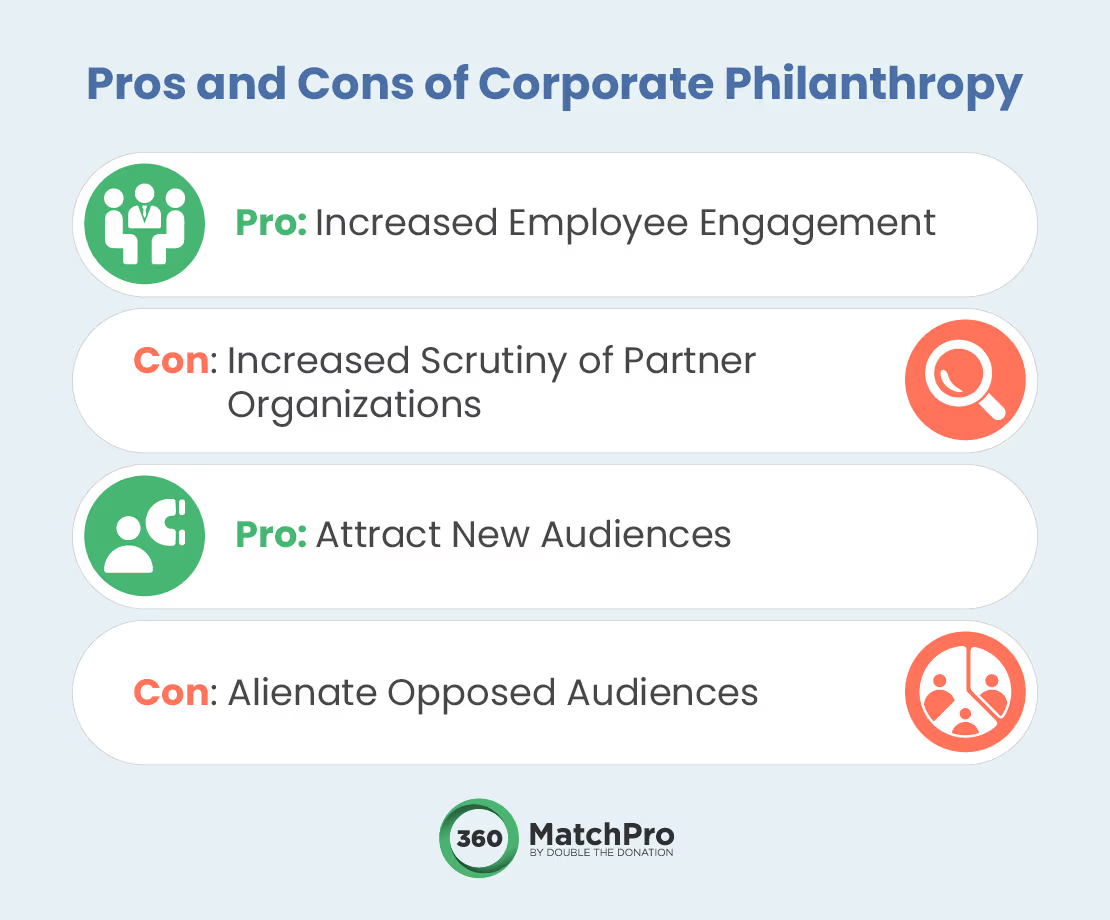
This leads to opportunities and hurdles alike for nonprofits, such as:
- Pro: Businesses can use philanthropy to engage employees. If a corporation can find a cause a majority of its employees feel strongly about, they can boost their engagement and increase loyalty by supporting it.
- Con: If a nonprofit fails to produce results or behaves poorly, the business’s reputation may be damaged. This goes both ways, meaning nonprofits and businesses alike need to do their due diligence in vetting potential partner organizations.
- Pro: Individuals who feel strongly about a cause are likely to seek out businesses that explicitly support it. This can help businesses earn new customers and potentially get your nonprofit in front of people who haven’t heard of your organization but want to buy from a brand that supports causes like yours.
- Con: Businesses are increasingly wary of partnering with nonprofit causes seen as partisan. For example, some companies have recently adopted the practice of “green hushing,” in which they downplay their positive environmental impact amid backlash against ESG and fears of being accused of greenwashing if their efforts fall short.
For nonprofits, frankly assess your cause and your audience. Then seek out businesses whose audiences likely already support your mission. Through these partnerships, your nonprofit will gain access to new potential donors who are inclined to support you, and the business will be able to maintain a clear and consistent brand image without fear of backlash.
Trend #8. Corporate giving totals up year over year
Individual charitable giving trends can differ greatly from corporate giving trends. For example, studies show that corporate giving increased by 9.1% in 2024 while individual giving grew by 8.2%. This is happening because of:
- Global economic recovery. Significant economic growth was recorded in 2022 as corporations recovered from the pandemic. This allowed more corporations to donate than in previous years. Also, the fragile state of the economy meant that nonprofits needed more charitable support from corporations when they recouped.
- Increased CSR initiatives. Nonprofits Source’s guide to online giving reports that 39% of companies surveyed plan to expand their corporate giving programs. More corporate giving programs mean more money flowing through that channel to nonprofits.
Given the increasing number of companies embracing CSR and launching corporate giving programs, there are nearly endless opportunities to find support from companies. The easiest way to capitalize on this trend is to leverage a corporate giving database that tracks companies’ giving policies. This allows nonprofits to streamline research and stewardship of company prospects so they can efficiently build relationships.
For companies, spending money to make money is an important strategy. Corporate giving providers should leverage the opportunity to fill the gap left by lapsed individual donors’ giving and make their mark on the nonprofit world even stronger.
Trend #9. Sustained CSR despite economic shifts
With the various recessions that have hit the economy in recent years, corporate giving has changed dramatically, but continues to impact nonprofits. According to TrueImpact, some companies have preserved their corporate giving programs in the face of economic downturn by:
- Pivoting to different types of giving. When financial resources become tight, companies have adapted by focusing on donations of volunteer time, pro bono services, and in-kind resources instead of monetary gifts.
- Clarifying cause focuses. If a company has a limited budget during a recession, honing its giving efforts can help conserve funds while still making an impact. For example, focusing on relief efforts during a natural disaster can direct spending to urgent causes while reducing the company’s expenditures.
During economic uncertainty, nonprofits should remember that monetary donations aren’t everything. If companies can only provide certain types of support, nonprofits should consider broadening their understanding of the support their organizations need and how to pivot their operations accordingly.
For companies, it’s a good idea to research areas important to their employees and to support them during economic downturns. This way, they can continue reaping the benefits of corporate giving while preserving their bottom line.
Corporate Giving Trends FAQ (Questions You Might Be Asking Now)
After reading up on some of the industry shifts and patterns we’ve noticed lately, you might be asking yourself, or your broader development team, a few questions. We wanted to address those, too!
Will these corporate philanthropy trends last?
In general, the world of corporate philanthropy has two speeds: very slow and very fast.
The systems businesses establish to conduct corporate philanthropy are often entrenched and have shaped how the for-profit world interacts with nonprofits for decades. Charitable giving policies are updated but rarely undergo a complete overhaul, and the leaders who oversee corporate philanthropy efforts are usually there for the long haul.
In contrast, major world events, such as the COVID-19 pandemic and mass protests in the summer of 2020, can quickly cause businesses to re-evaluate the causes they’re giving to and why. Other changes, such as technological evolution and political shake-ups, can have similar impacts.
While we can’t guarantee these trends will prevail for decades to come, examples from the business world point to their importance in the current moment. This means that whether your nonprofit tries to jump on these trends or not, they are likely affecting your relationships with corporate sponsors in some capacity.
What’s next in the corporate philanthropy landscape?
From what we can see, the corporate philanthropy landscape is continuously shifting toward a more democratized, employee-directed model as businesses move away from traditional “top-down” leadership grants in favor of maximizing employee engagement. Companies are recognizing that nonprofit partnerships are essential for improving brand image and team morale, leading them to empower their workforce to dictate where charitable dollars flow.
This shift means that even large-scale sponsorships and formal pledges are increasingly secured through individual employee connections rather than cold outreach to executive leadership. For many organizations, individual supporters already serve as the primary bridge to formal corporate support. Specifically, 42% of nonprofits report that volunteers have acted as internal advocates to help launch formal partnerships, while 20% found that hearing that employees already volunteered helped “warm up” high-level fundraising conversations.
What do these corporate giving trends mean for my nonprofit?
How much corporate giving impacts your nonprofit depends on how much you rely on corporate partnerships, grants, and donations.
If you seek sponsors only for a single annual event, you may see a slight uptick or downtick in corporate participation, but otherwise you won’t be greatly impacted. On the other hand, nonprofits that work with multiple businesses or plan to improve their networking in the corporate world need to closely monitor these developments.
However, trends in corporate philanthropy generally affect which businesses are interested in working with your nonprofit, how many want to work with your nonprofit, what level of support they will provide, and through what means they’ll support you.
More Corporate Philanthropy Resources
Corporate philanthropy evolves just as attitudes, business practices, and CSR technology shift over time. Stay up to date with the latest developments by reading philanthropy journals, keeping up with the news, and connecting with other nonprofit professionals.
To discover even more about the current state of corporate philanthropy, check out these additional resources:
- What Is Dollars for Doers? Everything You Need to Know. An underutilized type of corporate philanthropy is volunteer grants, also known as dollars for doers. Explore how your nonprofit can take advantage of this corporate giving program.
- How to Market Matching Gifts: The Comprehensive FAQ Guide. Matching gifts are a key part of corporate philanthropy, and your nonprofit can earn more by promoting them to supporters. Get tips on how to market them in this guide!
- Top 10 Trends in Corporate Philanthropy: How to Tap In. Discover even more trends in philanthropy and how your nonprofit can take advantage of them.